Keynote
Taming System Complexity - Global Scheduling and the Time-Triggered Approach
The automotive industry is just entering the fail-operational field, but the safety processes and architectures are not on par with other fail-operational industries like aerospace. For example, the standard approach to guaranteeing safety and reliability in automotive has been based on extensive testing in which system integrators and engineers were tasked with developing testing suites to cover as many critical scenarios as possible. However, as complexity continues to rise and new safety standards emerge, e.g. the need for fail-operational in fully automatic driving scenarios, the limitations of traditional testing-based approaches and the need for correct-by-design approaches become evident. Irrespective of the underlying scheduling method, ensuring correctness by design is an NP-complete problem for applications featuring complex dependencies like cause-effect chains with tight end-to-end latencies that span multiple computing nodes and the deterministic communication backbone. This means that as the system grows in size, in the number of software functions, and in the complexity of their temporal dependencies, it may take an exponentially increasing amount of time to prove the temporal correctness at design time.
This talk will focus on how to tame this increasing complexity and give design-time guarantees that can scale with the size of the system. We will look at the pros and cons of using a time-triggered paradigm to shift the complexity from an exponential explosion in runtime states and testing effort to the offline solving of the NP-complete schedule synthesis problem. Moreover, we will see how to augment the time-triggered approach with event-triggered scheduling for more flexibility in dynamic scenarios.
Silviu S. Craciunas
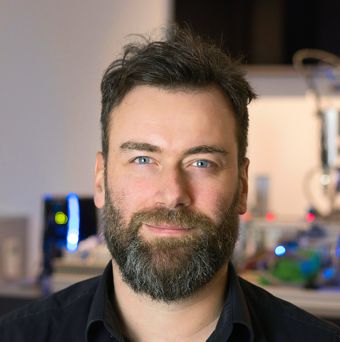
Silviu S. Craciunas is a principal scientist at TTTech Computertechnik AG, Vienna. He received his Ph.D. from the University of Salzburg, Austria, and before joining TTTech, he was a senior researcher at the Embedded Software & Systems Research Center (SRC). His research interests include real-time and safety-critical distributed systems, real-time scheduling algorithms, and deterministic (time-triggered) networks. Most of his research work is currently centered around designing and evaluating new methods and algorithms to solve complex large-scale scheduling problems in multi-core multi-SoC platforms, spanning both the application and network domains. He received the Best Paper Award from RTNS in 2014, an Outstanding Paper Award from RTNS 2022, the "Emerging Technologies" Best Paper Award from ETFA in 2020, as well as an Outstanding Paper Award at RTAS 2024.